Contact Us

Use the form on the right to contact us.

You can edit the text in this area, and change where the contact form on the right submits to, by entering edit mode using the modes on the bottom right. 


123 Street Avenue, City Town, 99999

(123) 555-6789

email@address.com


You can set your address, phone number, email and site description in the settings tab.
Link to read me page with more information.

JOURNAL

The process diary of film director Glendyn Ivin

ON THE STREET

Glendyn Ivin

I've had a 'fancrush' on photographer Joel Meyerowitz for many years. His street photography is amazing, but for me it's the way he observes and captures particular qualities of light that keeps drawing me back to his work. The other day I watched this film made about him in 1981. Shot in New York, it's one of the best films I've seen about the discipline of street photography and what draws an artist like Meyerowitz to the street to photograph. The films camera sits back and observes Meyerowitz at work for extended sequences where he freely discusses his process to writer/curator Colin Westerbeck.

Click HERE to the view film, where it's featured on Nick Turpins great photography blog.
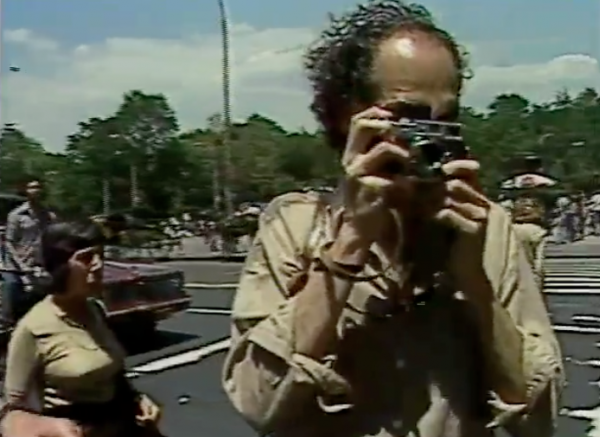
There are so many great moments in the film. If you don't have 57 minutes to watch the whole thing, scan through to 28mins 50 secs and watch for 5 mins or so where they move to a particular street corner. Meyerowitz gives a running commentary of the real theatre of street life playing out. The people and their actions seem so well placed and timed like it's all been planned out that way. New York presents this constant swathe of characters like no other city can, but it does remind me to look for similar rhythms and movements and moments where ever I am. It also makes me think that Meyerowitz is one of these people that not only instinctively knows where to be, but also one of these people where things just happen where he is. Or perhaps it's just as he says, he's out there taking the 'risk'.

The last 10 minutes are also incredible. Meyerowitz and Gilberg are sitting chatting in the studio and Meyerowitz says he's "getting antsy cos the light is beautiful outside..." (I so know that feeling!). They go out onto the street where the sun is getting rich and golden. It's fascinating watching Meyerowitz walk with his huge plate camera across his shoulder accessing the street and the light and again intuitively feeling where the right spot to set up and take the single shot will be. Being compelled myself to photograph in and around first and last light, I found this sequence, which is pretty much shot in real time absolutely incredible. The way that Meyerowitz sits down after he gets the shot and writes detailed notes describing the colour, tone and quality of the light for him to refer to during development to me was so fascinating.

The film is a bit of time capsule for many reasons, but rest assured, Meyerowitz is still out there today doing what he has always done.
NONE MORE BLACK

Glendyn Ivin

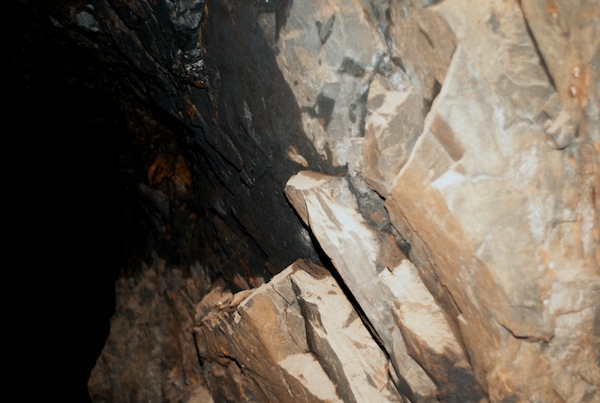
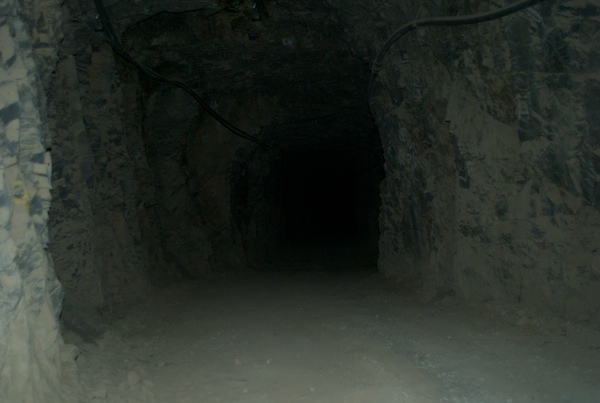
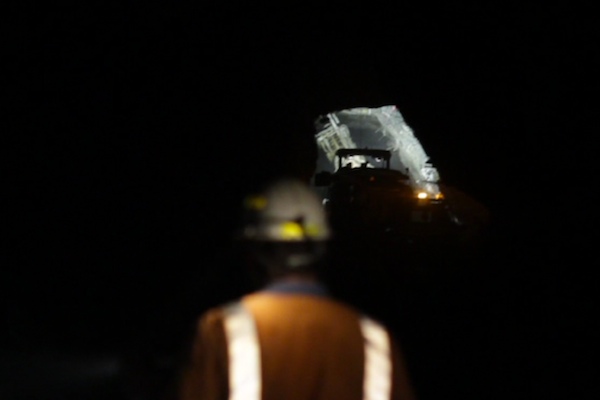
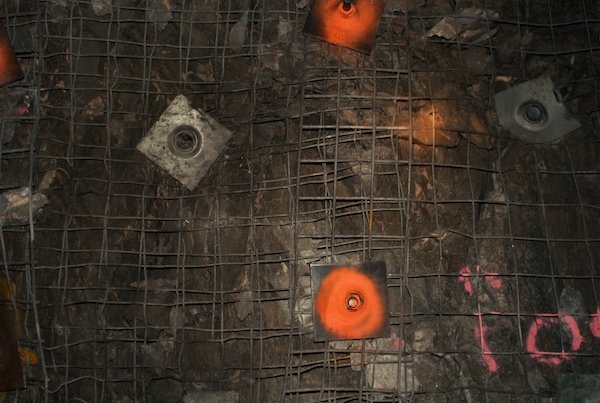
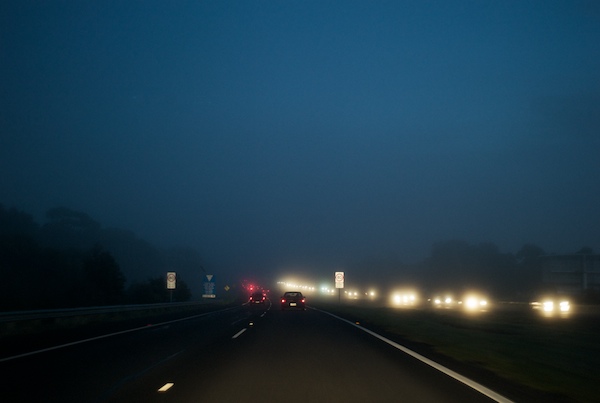
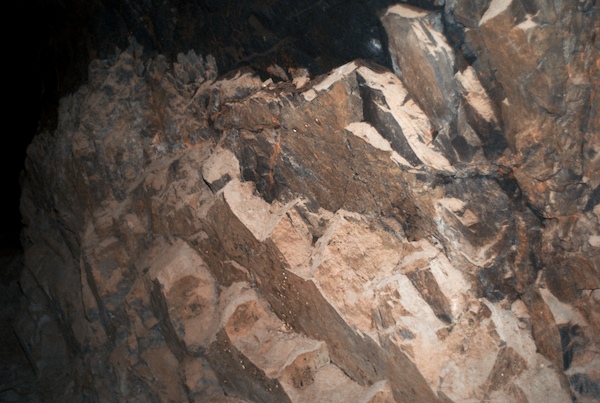
Spinal Tap fans may appreciate the title of this entry, but it's a line that seems most appropriate when trying to describe how dark it is inside a mine. I've been down a few mines in the past week and it really surprised me just how 'dark' they are. It's not a dark I've ever experienced. It's a dark that is so thick and dense and seemingly never ending. None of the access roads or mine drives are lit, and where there is a light the fact that it is surrounded by so much darkness it seems to be sucked up by the shadows and surrounding black rock walls much quicker than it would above ground. At one point while standing in a group we all momentarily turned our head lamps off at the same time. I don't think I've ever experienced that kind of blackness. You can't get 'none more black'. Your eyes will never adjust to the point where you can make out even the slightest variation in tone or definition. It's like your sense of 'sight' no longer exists.
This disorientating quality of darkness has been a recurring theme in our conversations of how we 'light' the film and how we approach the film visually and thematically as well. How do we 'show nothing'? It's a problem thats always been there for filmmakers. And I'm forever distracted with 'night scenes' where everything is lit with blue ambience and 'silver' halo cutting everyone magically from the background. If this was a film to be released in cinemas I think we could get away with sections of just blackness on screen, no light, but as this is for commercial TV we will have to have 'something' on screen that the audience can see. I think there will be many ways we can use the darkness to our advantage in creating a really immersive experience for the viewer. And as we will be shooting much of the film in studio (read: a warehouse in Footscray), we can use the darkness to 'extend' the sets we are planning to build.

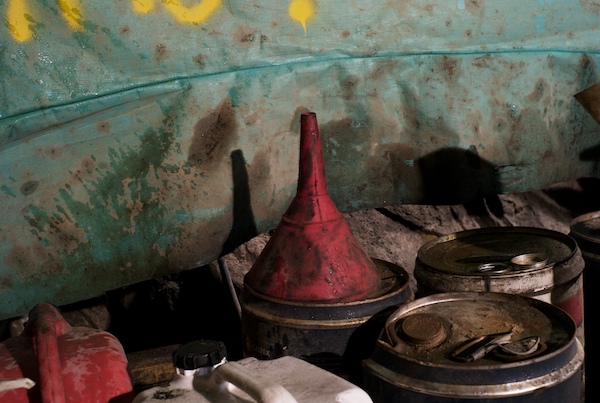
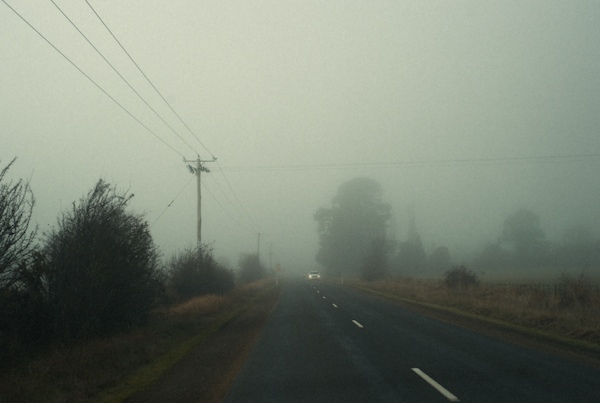
Images screen grabbed from test and recce footage shot by DOP Toby Oliver.

BEACONSFIELD

Glendyn Ivin

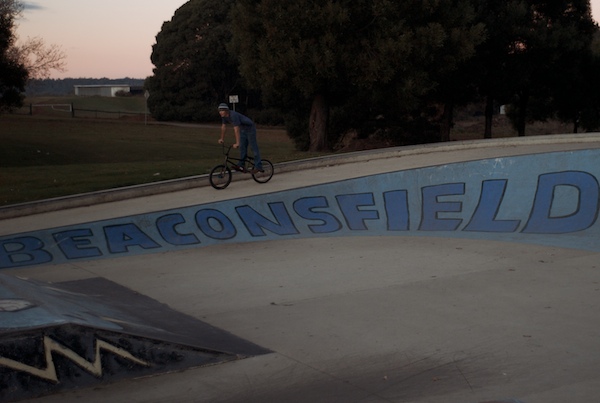
So... I'm directing a film on the Beaconsfield mine rescue (if you are from Australia you should know the story). The film, to be screened on Channel 9, is being produced by John Edwards (Southern Star) and Jane Liscombe and is written by Judi McCrossin. While I'm still in the thick of developing Cherry Bomb and other things, the offer to direct a project like this was to good to refuse. I dipped my toe into the world of commercial TV with Offspring last year and really enjoyed the experience. So I've been keen to do more when the timing and the project was right.

I've been in 'pre-pre-production for the last month or so (scripting, casting, crewing) and official pre-production starts next week. We start shooting in just under 7 weeks for a scheduled 23 days. The film will be around 2.5 hours in length. Fast and furious to say the least. But that's how it rolls in TV land.

I'm heading back to Beaconsfield in the north of Tasmania today and will be going down the mine for the first time to have a look. The kid in me is quite excited about going a 1000m underground into the dark and the heat. The older, perhaps slightly wiser part of me feels a little uncomfortable about it. Much more to come...

TIME TRAVELER

Glendyn Ivin

I saw this clip the other day and it's really stayed with me. I have boxes of old Video 8, SVHS, Mini DV and now HD data I have shot from the late 80's until now and I've been tempted to get it all transferred to hard drives. But with all the hours of footage I have gathering dust I could never cut a backwards chronological time sequence like this guy has. It's quite cool seeing this guy 'grow' younger, and interestingly, I think he looks much happier at the beginning of the clip, when he is older. I would love to see a more expanded version of a longitudinal diarised film like this.

WHAT A WONDERFUL (google) WORLD

Glendyn Ivin

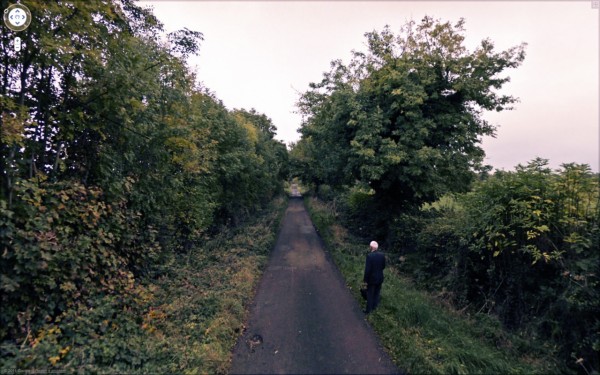
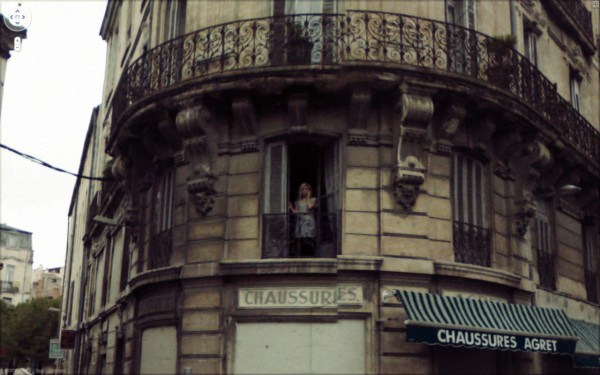
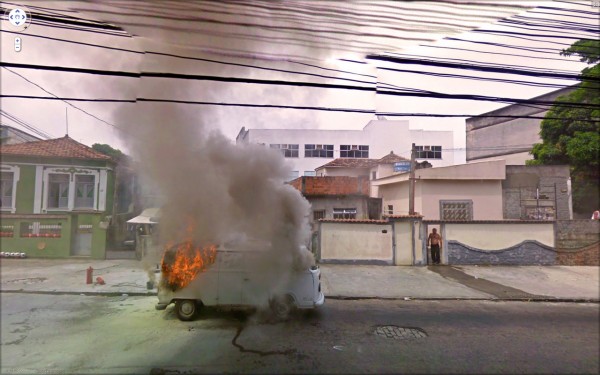
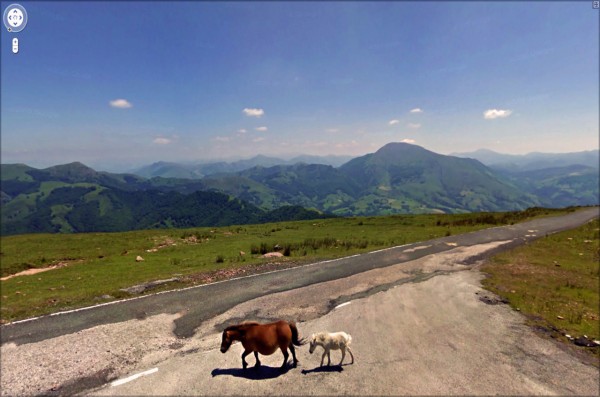
At first glance these images could be mistaken for great fine art or street photography. But they are sourced from an altogether different type of documentation. Similar to this other guy I blogged about a while ago, Jon Rafman who has created 9-Eyes must spend hours (months?) traversing Google Maps discovering the beautiful, bizarre, surreal and spontaneous moments of poetry and drama that daily life brings with it. All these 'scenes' are captured by the nine lenses perched on top of the Google vehicles as they drive around the world collecting data for Googles street view. It's well worth taking the 15 minutes or so it takes to scroll through the collection.

THIS TOOK MY BREATH AWAY...

Glendyn Ivin

...not sure how this could ever be a 'planned' scene, unless those birds are CGI. But I like to think it's a wonderful example of a cast and crew working intuitively and responsively to any given moment. A process where everyone is in synch. Where the director creates an atmosphere and gives 'permission' for moments for this to occur and develop. I think it's about being open to every moment and ultimately being well and truley 'in the moment'. Which with all the pressures of time and money and in this scene, fading light, I find as a director the absolute hardest thing to be... but moments like the above remind me to keep at the forefront of my mind. Regardless of what I'm expecting, planning or needing from a scene, ultimately the most important thing to happen, is the thing that is happening right there and then.

NYC pt2

Glendyn Ivin

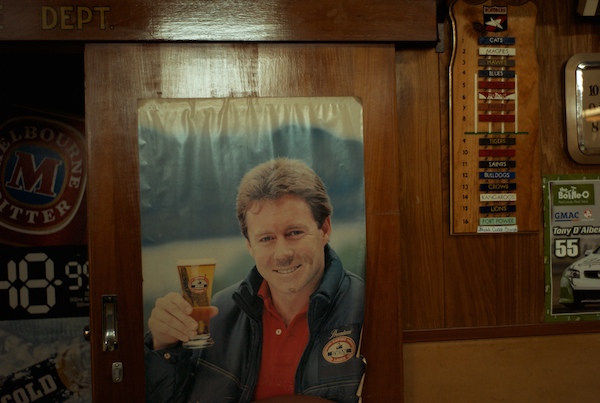
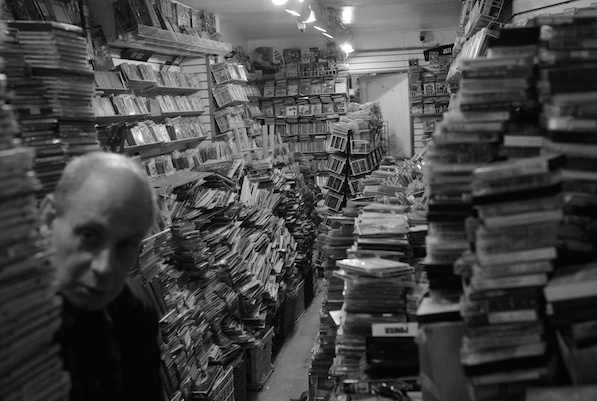
The owner / hoarder (pictured) of the 'record store' assured me at least five times in the three minutes I was in there, that he was coming in "tomorrow to clean up and organise everything...". Definitely the strangest record store I have ever been in.

MURUNDAK, SONGS OF FREEDOM

Glendyn Ivin

My friends Rhys and Tash over at Daybreak Films have recently released their latest feature documentary 'Murundak'. The film tells the story of the 'Black Arm Band' a super-group of legendary Aboriginal musicians from the past and present.  In showcasing the talents of the individuals the film charts the history of the Aboriginal protest movement and it's unique and very defined relationship to music.

I really didnt know what to expect from the film, I have no special interest in Aboriginal protest music nor is it something I would actively seek out. But Rhys and Tash have created a film that is so rich with the spirit of 'music' in general and not just a particular genre that I was soon swept away into a world I knew nothing of, but was really keen to explore and learn much more about.

The surprising thing for me and I'm sure for others, is even though I know very little about Aboriginal protest music, I have actually been quite happily exposed to it through far more popular music over the years. For example, I knew some of what the song Solid Rock was about. As a kid growing up in the 80's I loved it, but the film showed me the song in a new and very different light. It's way more than a forgotten mega hit of the 80's. It's relevance and power is just as significant now, perhaps even more so. The live version of that song that is performed in the film will stay with me for some time. Another song I'm quite familiar with is 'From Little Things Big Things Grow' which forms one of the centre pieces of the film, again I really like that song, and who doesn't, but never knew of it's history and it's significance to Aboriginal people. I like how these songs and more, exist in the mainstream and yet are very powerful political messages. I can't imagine a song like Solid Rock making it to the top 10 these days.

Having followed the making of the film from afar over the years it took to make, I know the guys really struggled in particular with the editing of the film. I think Rhys nd Tash were stuck in the edit suite for over a year (!) Trying to find the right balance of performance, interviews, historical footage, the history etc. And perhaps most importantly trying to shape a film which welcomes you in a way so you want to learn more (as apposed to a lot of films which become just advocacy for an 'issue') But watching it I could see no evidence of this creative struggle, in fact to their credit the film feels effortless in the way it flows. In this way the film actually feels like one whole piece of music.And making something so hard, look so easy is part of the filmmaking process these guys have nailed.

Murundak is currently in cinemas, check here to see if it's playing near you.